
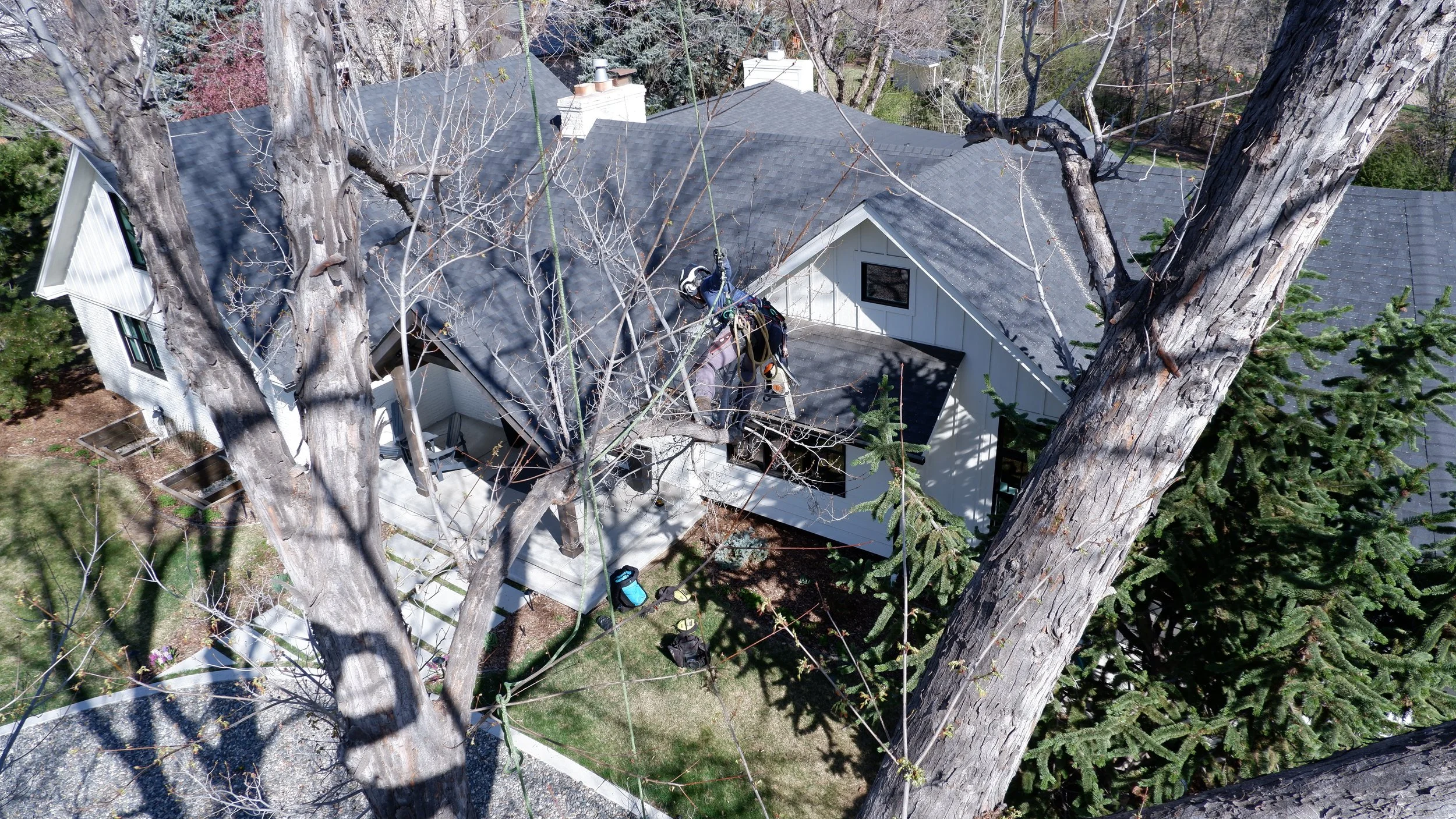
Tree Trimming and Pruning
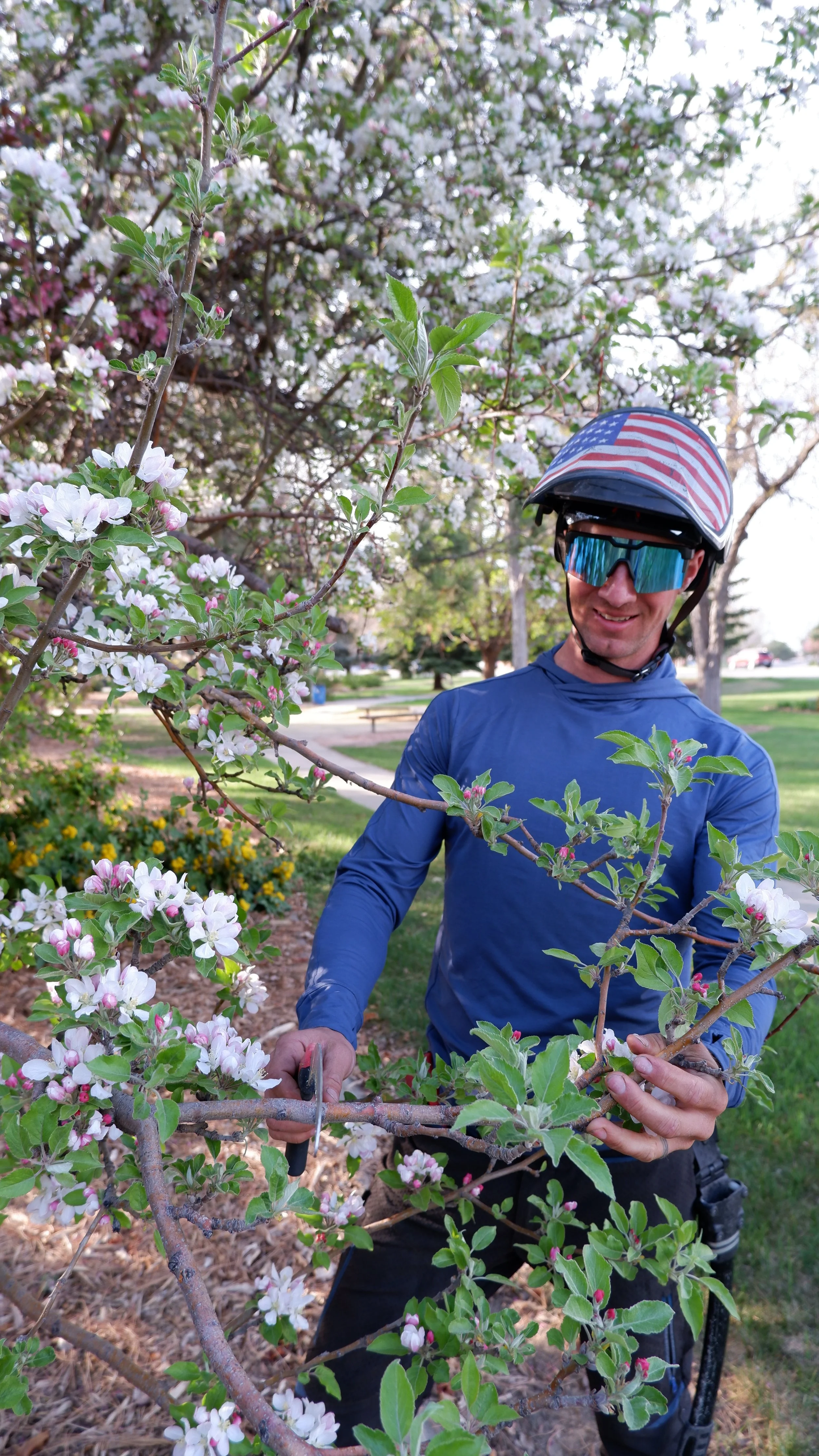
Tree Trimming Objectives
Pruning helps your tree achieve its greatest potential. Pruning can increase its lifespan, mitigate storm damage, reduce hazards, and keeps your tree beautiful and functional.
-
Trees are the largest, oldest living organisms on the planet that can grow to an incredible size and age. But the trees planted in your yard often struggle with the hardship of growing in an urban environment and their lifespan is often cut short. Tree canopies compete for space with infrastructure, buildings, and other trees. Their root systems have to deal with compacted urban soils and are confined between concrete barriers and foundations.
Pruning is required to help your tree achieve its maximum potential and long lifespan. A well maintained tree benefits your property value and outdoor experience, but a poorly maintained tree will have a shorter lifespan, be more likely to break during storms, depreciate your property value, and may even be a hazard. Our arborists work hard to ensure a long productive life for your trees so you can enjoy them for years to come.
-
You may think that your newly planted tree that is less than 10 years old doesn’t need any attention. Wrong! This may be the most critical pruning period of your tree’s life. By developing proper structure early on an arborist can avoid major problems your tree may have in the future. A young tree benefits greatly from developing a central leader at a young age. We also address limbs and branches that will conflict with infrastructure like buildings, patios, roads and sidewalks at this time and start to develop the lowest permanent limbs. Another critical objective is to remove branches and limbs that have poor branch attachments. If left unattended these weak limbs can grow to a large size and when they do break in a storm or due to stress they can cause significant damage to the tree and your property.n text goes here
-
At 15-40 years of age a tree is putting on rapid growth and you are starting to enjoy the benefits you envisioned when you planted it. It provides shade during the hot summer months and reduces your energy use. It is becoming the focal point of your landscaping, and perhaps putting on a brilliant display of spring blooms or fall color. If your tree has been structure pruned by our arborists in the past we will continue to build its strong central lead and address any weaknesses that may have arisen as it has added height and breadth. Unfortunately this is often the first time an owner has thought about having their tree pruned and we may have to take drastic measures to correct its form or structure. It may have large limbs encroaching your house or hit your head while mowing that may need to be removed. We often find poorly attached limbs that have become sizeable that need more complex solutions. Your tree may need supplemental support systems like wires and cables to provide stability for some limbs that were not addressed at a young age. It is not too late to address some of these concerns, but it may take a little more work to get it into tip top shape.
-
Did you inherit some large mature trees when you bought your property? Or perhaps that little seedling you planted all those years ago has finally grown to a wonderful mature tree that is the centerpiece of your yard?
Hopefully any major structural weakness has been addressed long ago, and we can focus on keeping your tree healthy and happy. Our arborists will focus on helping these big trees weather the wind and storms by reducing weight on large heavy branches, and removing dead branches and limbs that don’t benefit the tree and can pose a hazard.
Unfortunately for some trees they may be nearing the end of life at this stage. Your old tree may have large amounts of dieback in the crown and branches or major structural defects that were not addressed and now pose a major risk. Our arborists will be able to provide insight and work with your goals to either retain such a tree as long as possible, or remove it from your landscape completely.
-
Are there dead or broken branches in the canopy of your tree? Do you have long branches hanging over your roof or house? These may be major hazards to people and your property. Many hazards can be addressed by pruning strategies that reduce loads on long heavy branches or remove broken and damaged branches. Even a small branch or limb can injure someone or cause property damage. Our arborists can help meet your goals for reducing the risk of a tree failing on your property and identifying risks that you may not have noticed.
-
Are you ducking under branches to mow your lawn? Is the garbage truck damaging branches on your tree?
If so you may have clearance and code compliance problems. We will work with you to establish the lowest permanent scaffolding limbs and start the canopy raising process. We also work to prevent damage to shingles, gutters, and soffits which can cost thousands to repair if a branch is rubbing or scraping part of your home. And of course, we will make sure you are in compliance with municipal codes the keep tree branches 8ft high over sidewalks and 14ft high over roadways.